



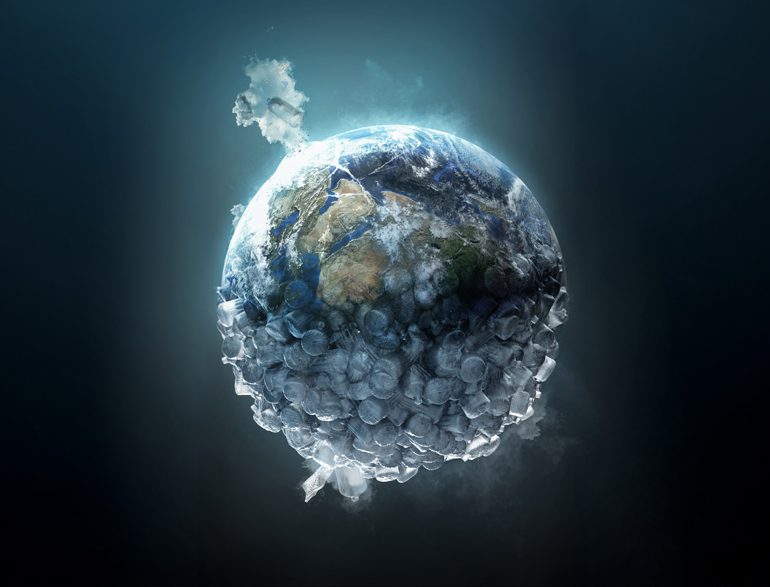
Mike Jones explains why a circular economy depends on worldwide unity
Despite the worsening plastic pollution crisis, world leaders have yet to agree on legally binding measures to curb the production of virgin plastic and build a truly global circular economy.
According to Earth Action for Impact, while 225 million tonnes of plastic waste will be generated this year, existing infrastructure can only manage 68 percent of it, leaving 72 million tonnes to become pollution rather than being re-used in a closed-loop cycle.
To address this, governments worldwide must work together to implement enforceable policies that create the infrastructure needed for businesses and consumers to meaningfully participate in the circular economy. Only then can we move toward a sustainable future, uphold the Paris Climate Agreement, and slow the pace of global warming.
World leaders continue to stall progress on global plastics treaty
The production of virgin plastic is bound to the petrochemical industry, with 99 percent of plastic produced from fossil fuels, which drives global oil demand and fuels destructive emissions. To promote a shift away from fossil fuels and mitigate the climate crisis, governments are attempting to curb plastic production to limit further fossil fuel consumption.
In August 2025, 184 countries gathered in Geneva, Switzerland, for what was meant to be the final round of negotiations for the Intergovernmental Negotiating Committee (INC-5.2). The goal was to establish the world’s first legally binding measures to limit plastic production and the toxic chemicals involved. Yet the outcome was another deadlock – the sixth since talks began in 2022 – as world leaders failed to agree on robust measures.
While nearly 100 countries – including the UK, Australia, Canada, Mexico, numerous African and Pacific nations, and EU member states – called for the adoption of such measures, oil- and plastic-producing nations – or “petrostates,” such as Saudi Arabia, Russia, and Iran – rejected production limits.
Following the negotiations, observers described the outcome as a “blow to multilateralism” and even suggested that future talks should exclude “petrostates”, deeming them clear obstructors to an international agreement. However, all countries must be included and aligned for a truly circular economy to succeed.
Tuvalu’s delegation warned that without global cooperation, the region’s oceans will remain inundated with millions of tonnes of plastic waste – threatening ecosystems, food security, livelihoods, and cultural heritage.
France’s minister for ecological transition, Agnès Pannier-Runacher, noted that some countries appeared to be prioritising financial interests over the treaty’s progress. Yet the reality is that a global plastics treaty is essential not only for the planet’s environmental health but also for long-term economic prosperity across the global stage.
Environmental and economic benefits of a global plastics treaty
Given plastic decomposes slowly – ranging from 450 to 1000 years in landfills – its waste endures in the world’s environments, and currently represents 80 percent of marine litter. This poses a severe and lasting threat to our oceans and biodiversity, with the Ellen MacArthur Foundation having found that if we do not act to ensure materials remain in a closed-loop cycle, there will be more plastic by mass than fish in the oceans by 2050.
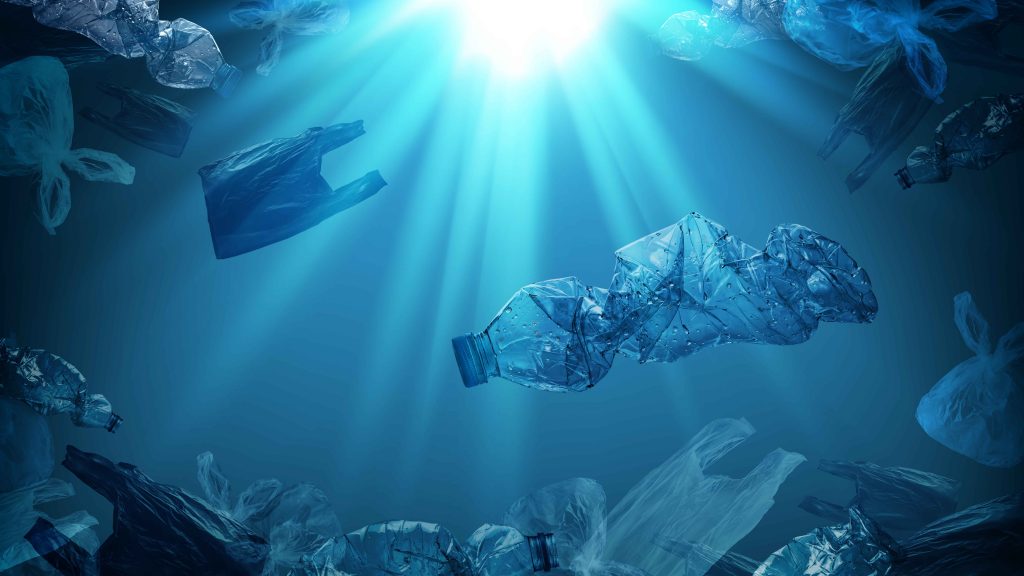
Plastic waste also impacts human health. The European Environment Agency revealed that the annual intake of microplastics by humans ranges from 70,000 to over 120,000 particles. This means that humans are ingesting and inhaling more microplastics than ever before, and as plastic polymers can contain a wide range of toxic chemicals, this leaves humans vulnerable to an array of health risks – from respiratory disorders to various cancers.
The plastics industry is still dominated by a linear economy, where new plastic is continually produced to replace what becomes waste – further fuelling the climate crisis. Virgin plastic generates significant greenhouse gas emissions at every stage of its lifecycle, from fossil fuel extraction to production, manufacturing, transportation, use, and eventual disposal. In the EU alone, plastic production accounts for 13.4 million tonnes of CO₂ emissions each year. If all these plastics were recycled, the demand for virgin plastic production would be reduced and could cut emissions by as much as 42 percent.

Beyond its impacts on the environment and human health, unchecked plastic production also poses serious economic challenges. According to the World Economic Forum, global production capacity for plastics is already outpacing demand. By 2030, output of the two key building blocks of plastic manufacturing – ethylene and propylene – is projected to exceed demand by 20.7 percent and 26.6 percent respectively.
As production exceeds demand, global operating rates are down. Average operating rates are projected at 80 percent for ethylene and 72 percent for propylene between 2022 and 2030 – a drop from 88 percent and 81 percent respectively during 2000 to 2021.
The result of overproduction and underuse is a sharp decline in capital returns. According to a 2025 report by Boston Consulting Group, the average return on capital employed for global petrochemical companies fell from eight percent in 2019 to around four percent in 2024, while earnings before interest, taxes, depreciation, and amortisation (EBITDA) dropped from 17 percent to about 12 percent over the same period. Adding to this decline, the Institute for Energy Economics and Financial Analysis reports that current returns on assets are now lower than they were in 2000.
It is clear that reducing plastic production by facilitating a circular economy is essential to not only safeguard the planet’s environmental health, but also to address the financial vulnerabilities created by a plastics industry that is over capacity.
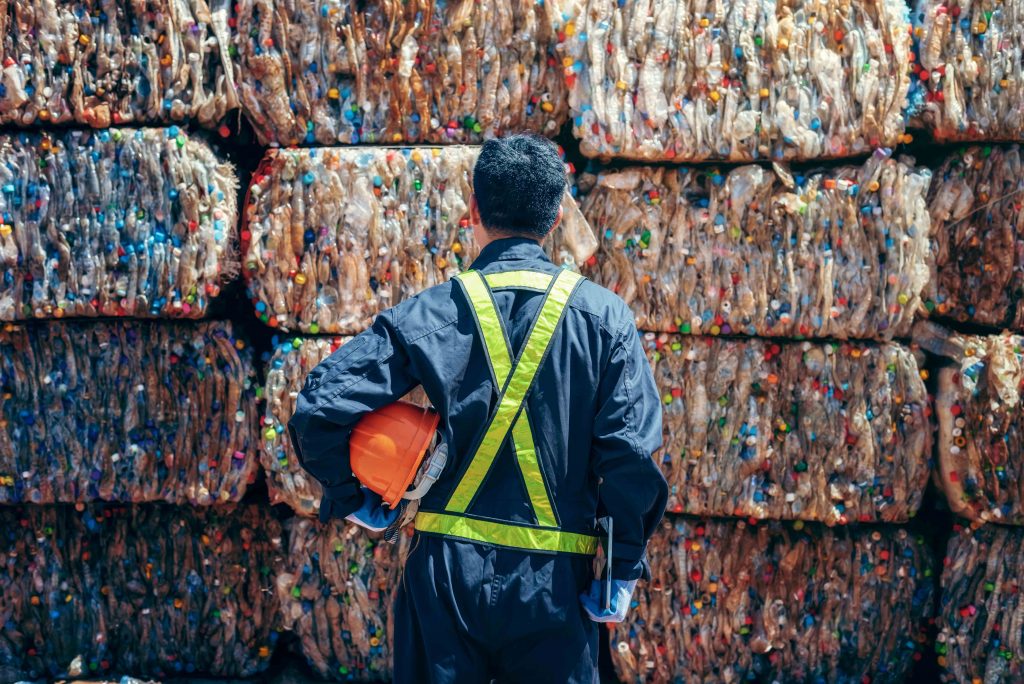
Looking ahead, government and industry must work together
Although the benefits of a global plastics treaty are undeniable, world leaders continue to stall progress, failing to unite behind a shared vision for a circular economy. This is largely due to pressures from the oil, petrochemical, and plastics industries as they continue to influence governmental decision-making. This was demonstrated by the 234 lobbyists who attended the Geneva talks in August – outnumbering the combined delegations of all 27 EU member states.
For governments to effectively transition to the circular economy, industries and businesses must commit to the same goal. For example, Mainetti supports the circular economy through its line of sustainable packaging solutions and Polyloop recycling process for clear polythene material. It is only through international alignment, combined with business innovation to develop sustainable and recyclable solutions, that we can unlock the environmental and economic benefits of a more sustainable future.
Mike Jones is the Head of Innovation at Mainetti